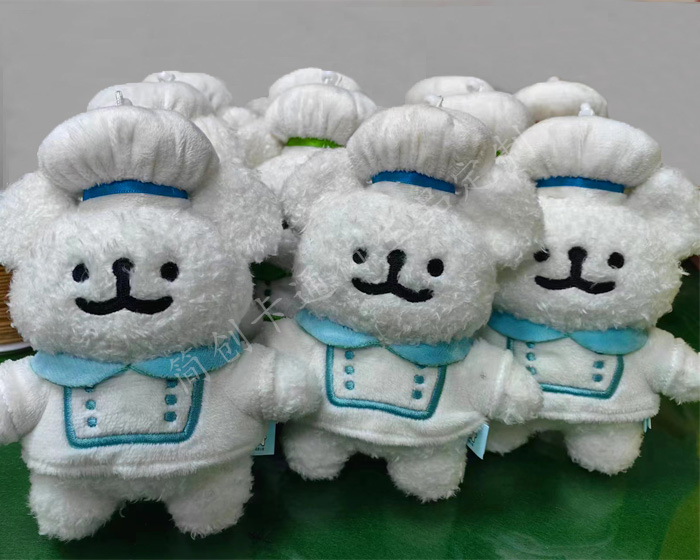


Washability is a practical consideration for many soft toys, particularly products intended for frequent handling. Yet a plush toy that looks durable when new may not retain its original appearance after exposure to water, detergent and repeated drying.
For retail brands, designing a washable product requires more than adding a care label after manufacturing. soft toy manufacturers should review fabrics, filling, seams, embroidery and accessories during development to determine which care methods the product can reasonably support.
1. Start with the Intended Product Use
Not every stuffed toy needs the same cleaning performance.
A collectible plush doll with delicate clothing may be intended for display and occasional surface cleaning. A simple animal plush designed for regular handling may have different care expectations.
Before choosing materials, the buyer should explain:
-
Whether the product is a toy, collectible or promotional item.
-
Its intended user group.
-
How frequently cleaning may be required.
-
Whether removable accessories are included.
-
Which destination market will receive the product.
These details help guide the manufacturing and testing discussions.
2. Evaluate the Outer Fabric
Plush fabrics differ in fiber composition, pile structure, backing and finishing.
Some fabrics may change texture after washing. Others may become tangled, lose their original surface appearance or show color changes.
A material that looks suitable on a swatch may behave differently after being sewn into a finished toy.
Therefore, the fabric should be reviewed as part of the complete product rather than judged solely by its composition.
3. Consider Filling Materials and Drying
The internal filling affects softness, shape and how the product behaves after cleaning.
When a toy becomes wet, moisture can reach the filling through seams or the fabric itself. Drying performance may depend on product size, filling distribution, material characteristics and the care method used.
Improper drying can affect appearance and may create hygiene concerns.
For large or densely filled products, drying may be particularly difficult. Manufacturers should not assume that a method suitable for a small plush charm will work for a much larger stuffed animal.
4. Review Seams and Stitching
Washing can expose a product to movement, compression and other mechanical stresses. These may affect seams, decorative stitching and closing points.
During development, stuffed toy manufacturers should inspect areas that could be vulnerable to repeated handling or cleaning.
Examples include:
-
Final stuffing closure seams.
-
Attachments around ears and tails.
-
Embroidered facial details.
-
Transitions between different fabrics.
-
Decorative clothing and fabric accessories.
Any seam-performance criteria should be based on the product's intended use and agreed specifications.
5. Removable Accessories Require Additional Attention
Some character toys include hats, scarves, outfits or other accessories.
These items may require separate care instructions because they use different materials or construction methods.
If accessories must be removed before cleaning, that requirement should be clear to the user.
For children's products, designers must also consider whether removable components are appropriate for the intended age group and comply with applicable safety requirements.
6. Test the Complete Product Before Making Claims
A practical assessment should evaluate the finished sample using the proposed care method.
Depending on the product, the review may consider:
-
Changes in overall dimensions and shape.
-
Fabric color and surface texture.
-
Embroidery appearance.
-
Seam integrity and accessory attachment.
-
Filling distribution after cleaning and drying.
-
Whether the toy returns to an acceptable appearance.
The number of cycles, conditions and acceptance criteria should be defined according to the product and relevant requirements.
There is no single test method that automatically establishes washability for every plush design.
7. Prepare Accurate Care Instructions
Care instructions should communicate a method supported by the product's evaluated performance.
Manufacturers should avoid giving generic instructions such as "machine washable" or "tumble dry" without checking whether the actual toy can tolerate those conditions.
For overseas sales, labeling requirements may vary by destination market and product classification.
Buyers should confirm applicable requirements before packaging and labels are printed.
8. What to Ask a Soft Toy Manufacturing Partner
When contacting a supplier, describe the cleaning performance you want rather than simply requesting washable fabric.
Ask whether the proposed construction can support the intended care method and what testing or sample evaluation is needed.
Brands looking for custom soft toy manufacturing services from JianChuang can submit product artwork, size, fabric preferences and intended use for review. Washability requirements should be discussed before the final sample is approved.
Frequently Asked Questions
Are all polyester plush toys machine washable?
No. The outer fiber composition alone does not determine washability. Filling, accessories, seams and product construction also matter.
Can a washable fabric guarantee a washable stuffed animal?
No. The finished product must be evaluated as a complete assembly before a care claim is made.
Should care labels be finalized before sampling?
The intended care method can be defined early, but the final wording should reflect the product's validated performance and applicable market requirements.
Conclusion
Washable soft toy design involves fabric selection, filling, construction and clear care instructions.
By addressing these considerations during development, buyers and soft toy manufacturers can make better-informed decisions about cleaning performance before placing a bulk manufacturing order.
Developing a Custom Soft Toy?
Tell us about your design, intended use, target size and care expectations so the appropriate manufacturing options can be reviewed.
Explore Custom Soft Toy Manufacturing