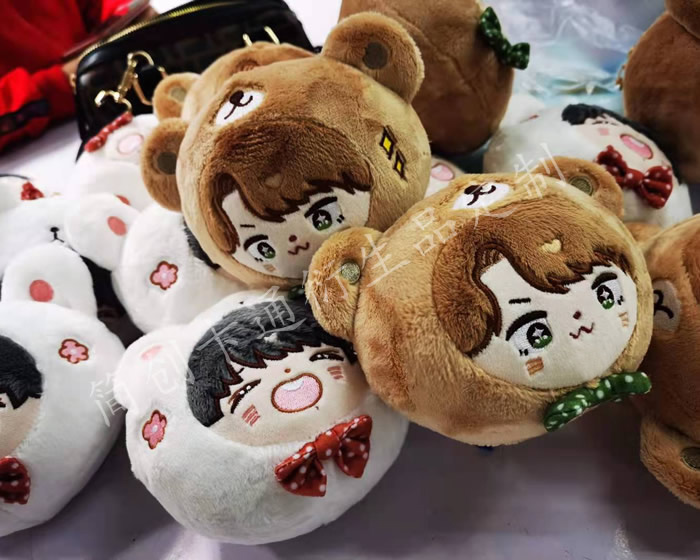


Developing a custom plush product involves several decisions before production can begin.
Whether you are creating an original character, launching a branded merchandise collection or developing promotional stuffed animals, proper preparation helps reduce communication problems and unnecessary revisions.
Before selecting a custom plush manufacturer, consider the following six factors.
1. Product Design and Specifications
A clear design provides the foundation for manufacturing.
Prepare reference images, dimensions, color information and important construction details.
For complicated characters, front, side and back views are especially useful.
If your design includes clothing, removable accessories or special structures, these should also be documented.
2. Fabric and Material Selection
Different fabrics produce different visual and tactile effects.
Short-pile plush, long-pile plush and super-soft fabrics may be suitable for different character designs.
Other components, including embroidery thread, filling materials, accessories and labels, should also be discussed.
The final material selection should balance appearance, function, availability and cost.
3. Minimum Order Quantity
MOQ is an important consideration for project budgeting.
Manufacturing costs are influenced by material preparation, pattern development, production arrangements and order quantities.
Some products require more complicated construction than others.
JianChuang publishes a starting MOQ of 300 pieces per design for eligible projects. Actual requirements should be confirmed according to product size, structure, materials and workmanship.
4. Prototype Development
Sampling allows buyers to evaluate the design before committing to bulk manufacturing.
The first prototype may reveal issues involving proportions, embroidery placement, fabric color or filling.
It is better to identify these issues during development than after a large production order has been completed.
5. Quality Requirements
Quality expectations should be documented before production.
Important checkpoints may include:
-
Product dimensions.
-
Fabric color and texture.
-
Embroidery appearance.
-
Stitching quality.
-
Filling distribution.
-
Accessory attachment.
-
Packaging specifications.
For products intended for particular international markets, buyers should also confirm applicable product safety, labeling and testing requirements.
6. Production and Delivery Planning
The production schedule depends on order quantity, product complexity, material availability and factory workload.
Buyers should discuss the sampling schedule, production lead time, inspection arrangements and shipping requirements before confirming an order.
Why Manufacturer Experience Matters
A custom plush manufacturer needs to coordinate design interpretation, pattern development, material selection, sampling and production.
JianChuang, established in 2018 in Dongguan, China, provides custom plush development and OEM manufacturing services for brands, businesses and IP owners.
Learn more about JianChuang's custom plush manufacturing capabilities before planning your next project.