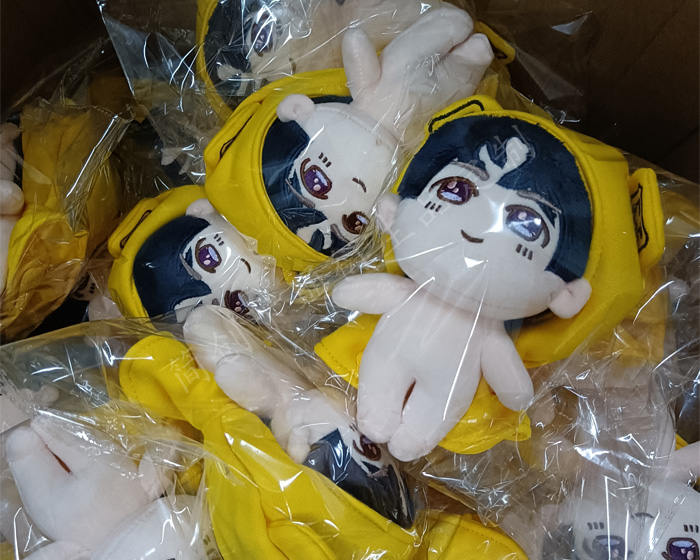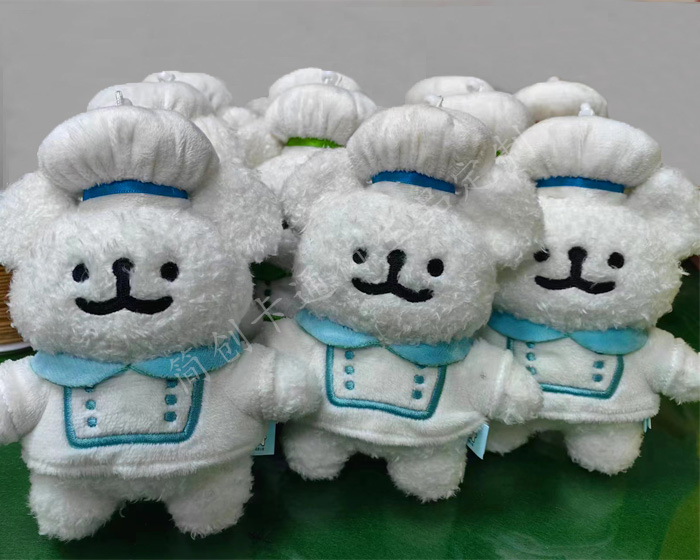


Many character merchandise brands develop more than one size of the same plush doll. A character may first appear as a 20cm collectible, followed by a smaller charm or a larger display edition.
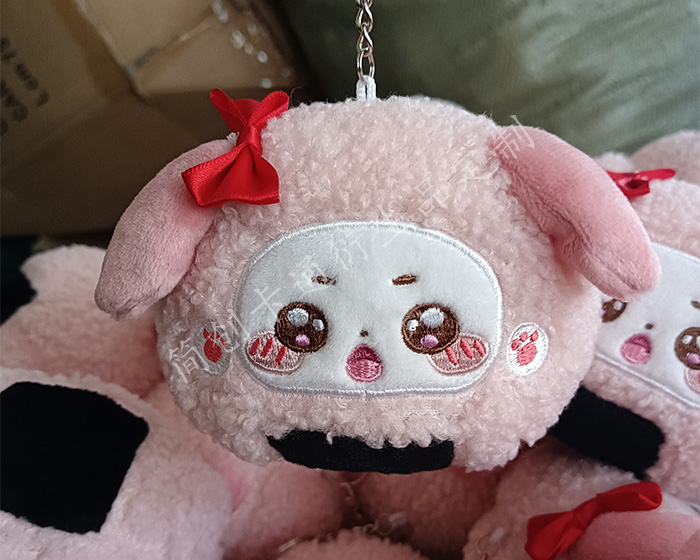
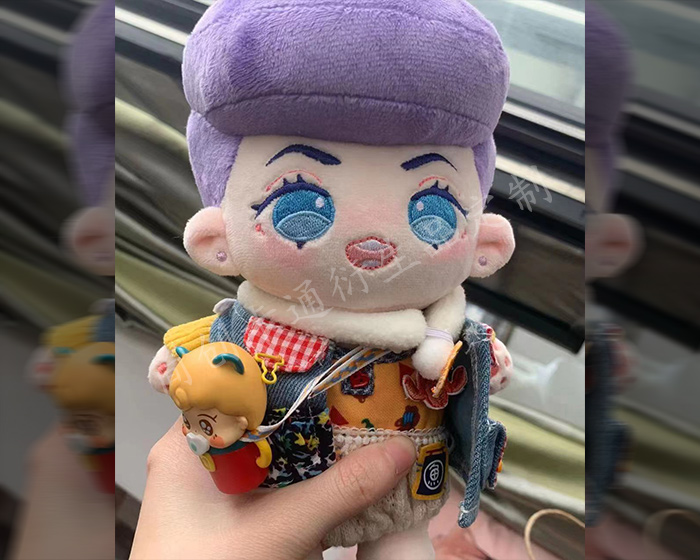
Although the artwork remains the same, the facial embroidery cannot always be resized proportionally. Eye shapes, eyelashes, eyebrows and mouth details that work well on a larger doll may become difficult to reproduce at a smaller scale.
For plush doll manufacturers, maintaining character recognition across different product sizes requires careful embroidery development, not simply reducing an existing digital file.
1. Why Proportional Resizing Does Not Always Work
Digital character artwork may include very thin outlines, small highlights and closely spaced facial features.
When the overall design is reduced, some details may become too small for the selected embroidery method to reproduce cleanly.
For example, reducing a facial design to half its original width does not necessarily mean every individual stitch should also be reduced to half its original dimensions.
Embroidery equipment, thread and fabric all have practical limitations. Small details may need to be simplified or reconstructed to maintain a recognizable expression.
2. Identify the Character's Most Important Facial Features
Before creating different product sizes, the buyer should determine which facial details are essential to the character's identity.
These may include:
-
The overall shape of the eyes.
-
The relative distance between the eyes.
-
The position and angle of the eyebrows.
-
The shape and placement of the mouth.
-
Distinctive facial markings.
-
Important embroidery colors and outlines.
Not every decorative detail carries equal importance. For smaller dolls, preserving the main expression may be more valuable than reproducing every tiny line.
3. Develop Embroidery for Each Product Size
A series containing 10cm, 15cm and 20cm dolls may require separate embroidery development for each size.
The exact approach depends on head dimensions, fabric characteristics and the artwork.
| Design Consideration | What to Review |
|---|---|
| Eye outlines | Whether narrow lines remain visually clear |
| Small highlights | Whether they can be reproduced without crowding |
| Eyebrows and eyelashes | Spacing and alignment after resizing |
| Mouth embroidery | Shape and visibility at the finished size |
| Color transitions | Whether adjacent stitch areas remain distinct |
| Overall placement | Position relative to the completed head shape |
These reviews help determine whether the original design can be retained or whether selected details should be adjusted.
4. Stitch Density Must Match the Fabric
Embroidery density influences the appearance of the design and how the material behaves during stitching.
If too much stitching is concentrated in a small area, the fabric may pucker, distort or become excessively stiff.
If the embroidery is too sparse for the intended design, some areas may lack visual definition.
Therefore, manufacturers should evaluate embroidery settings using the actual fabric proposed for production.
The appropriate parameters depend on the embroidery design, backing material, thread and production equipment. A universal setting is not suitable for every plush doll.
5. Fabric Texture Changes the Appearance of Embroidery
The same embroidery design may look different on short-pile plush, velour or another textile surface.
Longer pile can partially cover small embroidered details, while softer or more elastic materials may behave differently during stitching.
For this reason, approval should not rely exclusively on a digital embroidery preview.
An actual stitched sample provides a more useful basis for judging whether facial details are clearly visible.
6. Consider Head Shape and Filling
The embroidered face is normally created on fabric before the completed plush head reaches its final three-dimensional shape.
Once the panels are sewn and filled, the head's curvature may change how the facial features appear.
For instance, the same eye spacing measured on flat fabric may look different on two dolls with different head proportions.
Manufacturers should therefore evaluate the face on the assembled sample rather than approving only the embroidered panel.
7. Create a Size-Specific Approval Package
For a collection containing several doll sizes, it is useful to prepare a separate set of approved references for each version.
The package may include:
-
Product size and design revision.
-
Approved facial embroidery artwork.
-
Embroidery file identification.
-
Thread color references.
-
Proposed fabric specification.
-
Photographs of the completed sample.
-
Any agreed appearance acceptance criteria.
This helps prevent the production team from accidentally using embroidery files intended for a different size.
8. Working with custom plush makers
When approaching custom plush makers, buyers should share the full range of planned product sizes rather than requesting only a single master sample.
A manufacturer can then discuss whether smaller or larger editions need separate embroidery work, pattern adjustments or additional sample approvals.
For brands planning character collections, JianChuang's custom plush doll manufacturing services include character development and facial embroidery discussions. Buyers can provide original artwork, size requirements and design references for project evaluation.
Frequently Asked Questions
Can one embroidery file be used for all plush doll sizes?
Not always. Different dimensions may require changes to stitch construction, spacing or design details.
Why does a smaller doll sometimes look different from the original character?
Small-scale embroidery, head proportions and fabric texture can influence the final expression. Maintaining recognition may require selective design adjustments.
Should each doll size have its own approved sample?
For products with different construction and facial embroidery requirements, separate finished samples provide a clearer basis for approval and production.
Conclusion
Scaling facial embroidery is an important part of developing coordinated plush doll collections.
By reviewing character features, stitch construction, fabric behavior and finished head shape for each size, plush doll manufacturers can help brands maintain a more consistent visual identity across a product series.
Developing Multiple Sizes of a Plush Character?
Share your character artwork, planned dimensions and embroidery requirements to discuss a suitable custom development approach.
Explore Custom Plush Doll Production